OVERVIEW
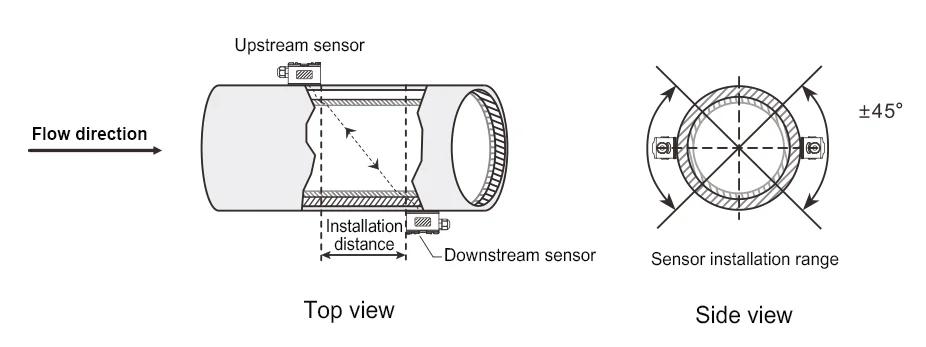
The Ultrasonic Flow Meter works by transmitting ultrasonic pulses through the fluid and measuring the time difference between upstream and downstream signals. This transit-time method calculates the flow velocity, allowing precise measurement of liquid flow. It is suitable for clean or slightly contaminated liquids, offering high accuracy, easy installation, and minimal maintenance. Ultrasonic flow meters are widely used in water supply, chemical, HVAC, and energy systems for monitoring and controlling liquid flow.
Working Principle
The Ultrasonic Flow Meter works on the transit-time principle. Ultrasonic signals are transmitted both upstream and downstream through the flowing air. The difference in travel time between these signals is proportional to the air velocity. The system processes this time difference to calculate precise air flow rate without causing pressure loss.
MAIN PARAMETERS
| Flow Range |
0.01 – 10 m/s (model-dependent) |
| Pipe Size |
DN15 – DN600 (depending on model) |
| Medium |
Clean or slightly contaminated liquids |
| Accuracy |
±0.5% – ±1% of reading |
| Operating Temperature |
-20°C to 120°C (depending on model) |
| Operating Pressure |
Up to 25 bar (depending on model) |
| Output Signal |
4–20 mA, Pulse, or RS-485 Modbus |
| Power Supply |
24V DC / 110–220V AC (depending on model) |
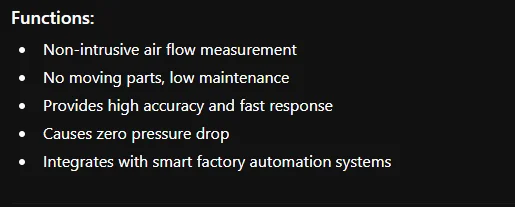
Functions
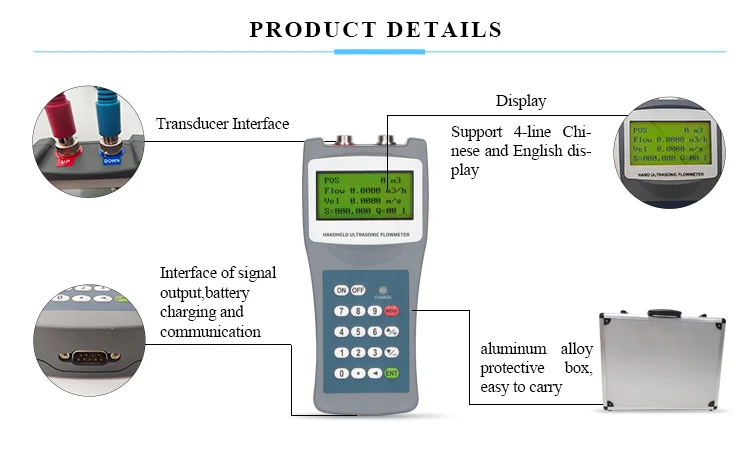
Display of Portable Ultrasonic Flow Meter
Display of Wall-Mounted Ultrasonic Flow Meter
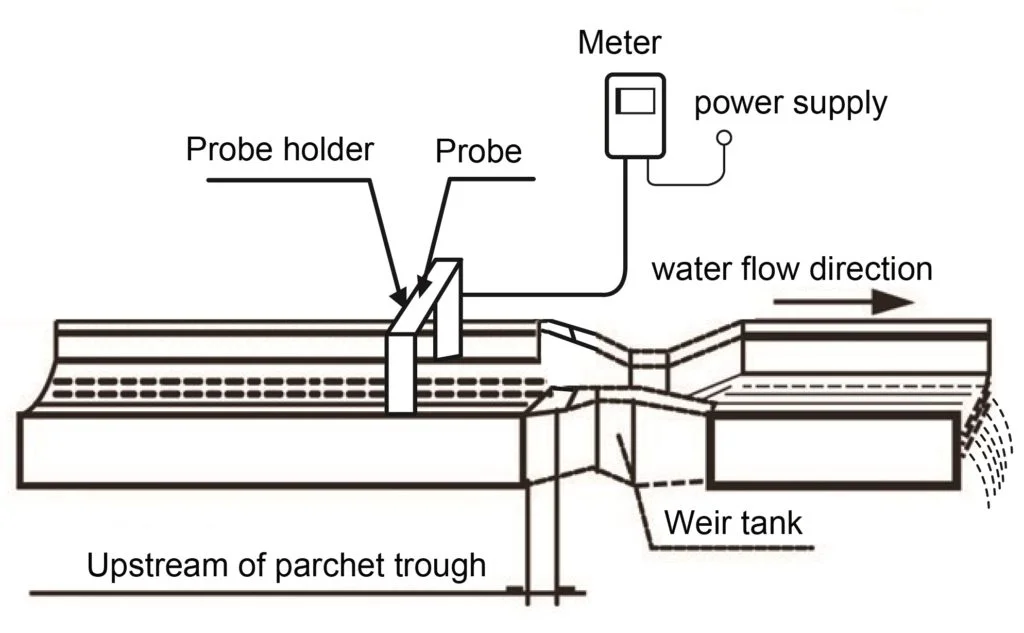
Display of Ultrasonic Open Chanel Flow Meter